Why Parks Departments Face Disproportionate ADA Enforcement Risk
Public parks belong to everyone, yet a 2023 New York State Comptroller audit found inaccessible entrances, restrooms blocked by obstacles, and limited parking for people with disabilities across state park facilities, with hundreds of barriers identified during site visits that had been flagged more than a decade earlier and never fixed. That audit is not an anomaly. It describes the operational reality for parks departments from coast to coast: large, geographically dispersed systems managed on tight budgets, with legal obligations that are often underestimated until a complaint or lawsuit forces the issue.
Parks commissions and public recreation authorities are not always the first agencies people think of when they consider ADA enforcement risk. Roads departments, transit agencies, and public buildings tend to dominate the conversation. As a result, parks departments often deprioritize accessibility compliance, treating it as a future capital project rather than a present legal obligation. That deprioritization is exactly why enforcement exposure is high. Parks and recreation department leaders work hard to ensure that public facilities are accessible to everyone, including the 28.7% of Americans who live with a disability, but good intentions do not constitute a compliance program.
As of the most recent adjustment, civil monetary penalties for ADA violations in DOJ-initiated actions reach $118,225 for a first violation and $236,451 for subsequent violations, though these apply primarily to Title III public accommodations rather than Title II government entities. Beyond fines, consent decrees can require multi-year remediation programs monitored by federal courts.
This article explains the structural reasons parks departments carry disproportionate ADA risk, identifies the physical barriers that most often trigger complaints, and lays out a practical framework to reduce exposure before a complaint forces the issue.
Key Takeaways
- Scale amplifies risk: Parks departments manage dozens or hundreds of sites simultaneously, and each site can be a source of complaints. A single audit by one city found 1,330 access deficits across 47 parks and 39 miles of trails, demonstrating how quickly barriers accumulate at scale. Departments should treat every new site as a compliance obligation from day one, not after a complaint arrives.
- Title II applies to every program, not just every building: Under DOJ regulations implementing Title II, public entities must ensure that programs, services, and activities are accessible when viewed in their entirety, meaning picnicking, fishing, and playground use are all covered programs, not just the physical structures that support them. If your department offers a program, it must be accessible.
- Transition plans are legally required, and many parks departments still lack them: DOJ regulations require public entities to conduct self-evaluations, prepare transition plans, and make those plans available to the public. A department without a current transition plan is openly non-compliant, and that absence can itself be used as evidence in enforcement proceedings.
- Maintenance failures reopen closed barriers: Even renovated parks can become non-compliant through ordinary wear and weather. A New York State audit found that mislabeled “accessible” signage and rough or uneven access routes developed at facilities previously considered compliant. Treat accessibility as an ongoing operational obligation, not a one-time capital project.
Quick-Start Prioritization Framework
Not every parks department is starting from the same position. Use this table to identify where your organization should focus first, then follow the "Start here if" guidance below.
Strategy | Best For | Effort Level | Time to Results |
|---|---|---|---|
Complete a system-wide access audit | Departments with no current transition plan | High | 3-6 months |
Prioritize accessible route barriers | Any department where routes are broken or missing | Medium | Weeks to months |
Update existing transition plan | Departments with a plan older than five years | Medium | 1-3 months |
Establish an ADA coordinator role | Departments without a designated compliance staff member | Low | Days to weeks |
Implement a complaint/grievance procedure | All departments, required by Title II | Low | Days |
Start here if you’re:
- A small parks district with no transition plan: Start with an access audit of your highest-use facilities, playgrounds, restrooms, parking, and primary paths of travel, and document what you find. A documented plan in progress is far better than no plan at all.
- A mid-sized department with an outdated plan: Commission an update using current 2010 ADA Standards for Accessible Design, and confirm your ADA coordinator has the authority and training to request changes.
- A large parks authority facing a complaint or lawsuit: Engage legal counsel immediately, and begin a documented self-evaluation to show good-faith compliance efforts to the court or DOJ.
Why Parks Departments Are Structurally Exposed
The Scale Problem Every Parks Agency Faces
Most public agencies have a manageable number of facilities. A public library system might have 10 to 20 branches. A transit authority oversees a defined network of stops and vehicles. By contrast, a parks department may manage hundreds of individual sites, each with multiple accessible elements and subject to the same legal standards.
A single city’s access audit identified 1,330 access deficits across the system and prioritized them over a 14-year timeline to ensure program access, including 716 barriers. That finding came from a mid-sized city with 47 parks. Larger urban systems face proportionally larger audit backlogs. The scale of the problem is not a reason to delay; it is precisely why a written, prioritized plan is essential. Without one, departments lack a defensible roadmap and evidence of systematic effort.
One parks department’s transition plan was part of its legal response to the U.S. Department of Justice after the DOJ audited Seattle Parks and Recreation for ADA compliance, which received approximately 2,200 citations. A proactive audit is always cheaper than a reactive one.
The “Program Access” Test Is Broader Than Most Officials Realize
Parks professionals often frame accessibility compliance in architectural terms: ramps, parking spaces, restroom grab bars. The legal standard is considerably broader. DOJ regulations implementing Title II of the ADA require local governments and public agencies to evaluate their services, programs, policies, and practices; identify barriers that may limit accessibility for individuals with disabilities; and develop transition plans describing how they will address those barriers.
Under the program access test, a “program” is any opportunity made available by the department. It is not just an activity for which a person registers and pays a fee; it can be the program of picnicking, parking, or fishing. It is a program if the parks department makes the activity available. That means a cracked path to a picnic shelter, an inaccessible fishing pier, or a porta-potty that cannot accommodate a wheelchair user can all constitute failures of program access, even if the shelter, pier, and surrounding grounds are otherwise compliant.
Pro Tip: Map every program or activity your department offers, not just the ones with registration fees. Informal uses like picnicking, fishing access, trail walking, and dog exercise areas all qualify as programs under Title II. Each one must be assessed for accessibility as a complete experience, from the parking area to the amenity and back.
The Physical Barriers That Drive Complaints
Playgrounds: The Most Visible Compliance Failure
Playgrounds consistently appear at the top of ADA complaint lists for parks departments, and the reasons are straightforward. Accessibility standards apply to playgrounds in parks, malls, schools, child care facilities, and other public accommodations covered by the ADA and the ABA. Many older playgrounds were built before the 2010 Standards took effect, and renovation projects have sometimes added new structures without correcting the accessible route connecting them to the parking area.
Playground barriers include access paths that are too narrow, too steep, or have uneven surfaces, gaps, or obstructions; surfaces within the play area that don’t allow movement with crutches, walkers, or wheelchairs; and a lack of access to play equipment for people using mobility devices. Every one of those barriers is a potential complaint trigger.
Inaccessible picnic pads, heavy self-closing gates, and benches placed in mulch without companion space can undermine technically compliant play structures. Inclusive playground planning works when you map the entire visit, from vehicle door to play experience to restroom break to departure. That end-to-end perspective is what compliance requires and what most audits reveal is missing.
Restrooms and Parking: The Two Most Common Complaint Categories
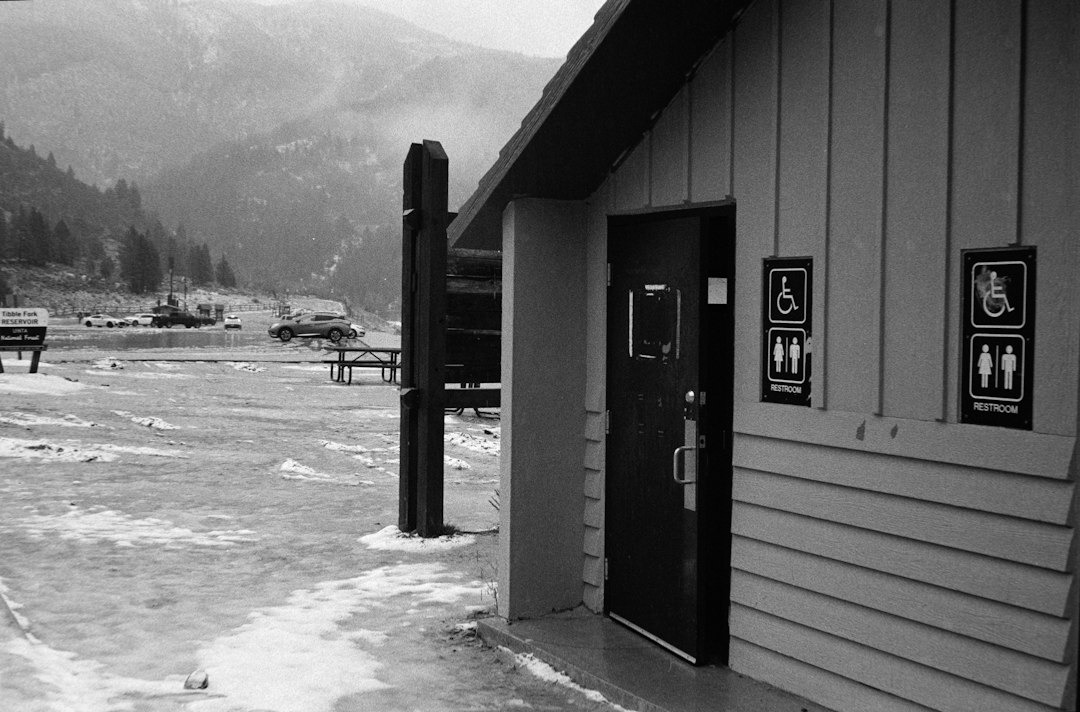
Most park restrooms have accessibility violations; even newer, renovated areas have barriers. These barriers make the restrooms inaccessible to many people who use mobility devices. Restroom compliance failures tend to cluster around a predictable set of issues: stall dimensions too narrow for wheelchair turning, grab bars absent or incorrectly positioned, sink height non-compliant, and door hardware that requires tight grasping or twisting.
Parking failures are similarly predictable. Common corrections include fixing rough or uneven access routes, increasing the number of wheelchair-accessible restroom stalls, and ensuring more accessible, clearly labeled parking spaces. Many departments discover during audits that technically designated accessible spaces are rendered useless by non-compliant surfaces, missing or faded markings, or routes from the parking area to the park entrance that include curb drops, soft surfaces, or steep cross-slopes.
Trails and Outdoor Routes: Compliance Gaps That Weather Creates
Accessible parking, route connections, maps, registration kiosks, gates, and toilet facilities determine whether people can begin the trail at all. Common barriers include kiosk controls mounted too high, inaccessible gate hardware, and route pinch points created by bollards intended to block vehicles.
The outdoor environment introduces a compliance challenge indoor facilities don't face: deterioration. Tree root growth, freeze-thaw cycles, erosion, and routine maintenance can create barriers on routes that were compliant at the last inspection. Maintenance is a hidden issue. Even compliant parks can degrade. Cracked paths or faded signs undo accessibility. Regular audits are essential but often neglected.
Pro Tip: Build a simple annual walkthrough checklist tied to your maintenance calendar. Assign staff to inspect the accessible route from the parking area to each primary amenity at least once per year, and after any major weather event. Document the inspection and any repairs made. That documentation becomes your evidence of good-faith compliance if a complaint is ever filed.
Real Enforcement Actions That Should Concern Every Parks Director
The Los Angeles Class Action
Thirty-four years after the Americans with Disabilities Act was signed, three people with mobility disabilities filed a federal class action lawsuit against the City of Los Angeles for denying them full and equal access to the City’s newly constructed and renovated public parks. The City’s parks and park facilities were found to have multiple, pervasive, and hazardous physical access barriers, including dangerous and inaccessible pedestrian pathways, inaccessible entrances and exits, inaccessible restrooms, inaccessible public buildings, inaccessible paths of travel, inaccessible athletic fields, inaccessible picnic areas, inaccessible playgrounds, and inaccessible or nonexistent parking.
The case shows the City’s longstanding ADA noncompliance, which has already cost at least $1.7 billion in related legal settlements over the past decade. The critical lesson: the barriers in the Los Angeles case were not hidden or obscure. They were cracked paths, steep ramps, and missing accessible parking, the same categories audits flag everywhere. The difference is that no systematic remediation program existed. Knowingly failing to act after identifying barriers is among the most damaging positions a public entity can take in enforcement proceedings.
The Washington State Parks Settlement
The U.S. Department of Justice and the Washington State Parks and Recreation Commission reached a settlement agreement to resolve a complaint that park facilities fail to conform to the Americans with Disabilities Act, with the state parks undertaking a program to identify and remediate noncompliant paths, facilities, and structures. The original complaint arose from a single camping area; a single visitor’s experience triggered a statewide remediation obligation.
Within one year, Washington State Parks had to provide the U.S. Attorney’s Office with a list of noncompliant buildings and facilities, a remediation plan, and a timeline to make the facilities ADA-compliant, with remediation beginning as soon as October 1, 2025. That is the scope of commitment a single complaint can produce when no proactive compliance framework exists.
Pro Tip: A complaint filed with the DOJ is not the end of the process; it is the beginning of a potentially multi-year federal oversight relationship. Departments that can demonstrate a documented self-evaluation, an active transition plan, and a functioning grievance procedure are in a dramatically better position to negotiate limited, targeted remediation rather than a system-wide consent decree.
The Transition Plan Gap: A Legal Obligation, Not a Best Practice
DOJ regulations implementing Title II require local governments and public agencies to evaluate their services, programs, policies, and practices, and identify barriers that may limit accessibility for individuals with disabilities in a process called a self-evaluation, and develop a transition plan describing how they will address the removal of physical or structural barriers to accessibility.
The transition plan is a legal requirement, not a best practice, not a funding aspiration. Parks agencies that have not finalized a transition plan, or have not developed formal rules, policies, and procedures pertaining to ADA compliance, are in open non-compliance with their administrative obligations.
Transition plans are living documents which must be reevaluated and changed over time to evaluate and include changes in programs and facilities, as well as new or different funding opportunities. A transition plan prepared in 2005 and never updated is unlikely to reflect current standards, current facility conditions, or recent additions to the parks system. Courts and the DOJ view outdated plans unfavorably.

BlueDAG provides tools designed to help public agencies manage their ADA self-evaluations and transition plans systematically, replacing ad hoc spreadsheets and paper-based tracking with auditable, documented compliance records.
What a Practical Compliance Program Looks Like
Step One: Conduct a System-Wide Access Audit
Under federal regulations, parks and recreation facilities must comply with the Standards for Accessible Design when built or altered. A park accessibility audit requires examining trails, play surfaces, restrooms, parking, and amenities as a connected system, not a list of isolated items.
The audit should cover every public-facing element at every site, prioritizing accessible routes first, since a broken route can deny access to every other compliant amenity it was supposed to connect.
Step Two: Build a Written, Prioritized Transition Plan
A comprehensive transition plan should contain: a list of the physical barriers in a public entity's facilities that limit the accessibility of its programs, activities, or services to persons with disabilities; a detailed outline of the methods to be utilized to remove these barriers; and the schedule for taking the necessary steps to achieve compliance with Title II of the ADA.
Prioritization matters. Most parks departments cannot eliminate every barrier in a single budget cycle. A defensible transition plan documents that the highest-impact barriers, those affecting the accessible route, accessible parking, and accessible restrooms, are scheduled for earliest remediation.
Step Three: Designate an ADA Coordinator and Establish a Grievance Procedure
Title II requires designating a responsible employee to coordinate compliance and carry out ADA responsibilities, and establishing a grievance procedure for resolving complaints of violations. These are administrative requirements, not optional management practices. A department that cannot name its ADA coordinator or point to its grievance procedure in the first five minutes of a DOJ inquiry has already signaled a lack of systematic compliance effort.
Step Four: Train Staff Who Touch Design and Construction
Train all parks employees involved in planning, developing, or implementing new construction or alterations on the ADA program. Most new construction violations identified in parks enforcement actions could have been prevented if the design or construction team applied current accessibility standards at the planning stage rather than at the ribbon-cutting stage.
Frequently Asked Questions
Does the ADA apply to small parks districts and special districts, not just large city departments?
Yes. Title II of the ADA applies to all state and local government entities regardless of size. The major difference between Title II and Title III is that Title II requires an ADA coordinator, self-evaluation, a transition plan, a grievance procedure, and public notice, while Title III does not. A small parks district may have extended timelines for certain requirements, but the underlying obligation to provide accessible programs and to avoid discrimination is the same as for a large urban system.
What is the “program access test,” and how is it different from the construction standards?
The program access test applies to existing facilities built before the current standards took effect. For facilities and sites that existed before March 15, 2012, the DOJ applies the “program access test.” For example, if a city offers the “program” of playgrounds at 20 different playgrounds, it must make some playgrounds compliant with the access requirements in the 2010 Standards. The test does not require every individual facility to be fully compliant; it requires the program as a whole to be accessible. New construction and alterations, by contrast, must fully comply with current standards regardless of cost.
What penalties can a parks department face for ADA violations?
Penalties for violating the Americans with Disabilities Act range from civil fines exceeding $118,000 per violation to court orders requiring physical changes, and attorney’s fee awards that can dwarf the underlying dispute. Beyond DOJ-initiated civil penalties, individuals can file private lawsuits directly in federal court. Consent decrees and court-supervised remediation plans can impose years of mandatory reporting and compliance monitoring at a significant ongoing cost.
How often does a parks department need to update its transition plan?
The self-evaluation and transition plan were supposed to be conducted in the early 1990s. Although no regulation requires updates on a fixed schedule, updating is the best way to ensure compliance with current regulations and design standards. In practice, any department that has added new facilities, altered existing ones, or changed its programs since the last plan was completed should treat an update as overdue. A plan that does not reflect current conditions is of limited defensive value in an enforcement proceeding.
What is the single highest-priority action for a parks department that has no current plan?
Begin a documented access audit immediately, starting with your highest-use sites. One fundamental reason to do a self-evaluation is to identify potential problems before they occur, so you can reduce and eliminate discrimination complaints. Document every inspection, every finding, and every repair. A department that can demonstrate it identified barriers and acted on them is in a fundamentally different legal position than one that cannot show any record of compliance effort. Tools like those available at www.bluedag.com can help structure and document this process in a defensible, organized format.
Disclaimer: This article is provided for general informational and educational purposes only and is not intended to constitute legal advice or a legal opinion. While reasonable efforts have been made to provide accurate and current information, laws, regulations, standards, guidance, and interpretations may change, and no representation or warranty is made regarding the accuracy, completeness, or applicability of the information provided. References to tools, resources, or compliance approaches are for informational purposes only and do not guarantee compliance with the Americans with Disabilities Act (ADA) or any other applicable law or regulation. Readers should consult qualified legal counsel or other appropriate professionals regarding their specific circumstances. BlueDAG assumes no liability for any errors or omissions or for actions taken or not taken in reliance on the information contained in this article.
Sources
- DiNapoli: Improvements at NYS Parks Needed to Remove Barriers for People With Disabilities, New York State Comptroller. 2023 audit finding inaccessible entrances, restrooms, and limited parking across New York State parks. https://www.osc.ny.gov/press/releases/2023/08/dinapoli-improvements-nys-parks-needed-remove-barriers-people-disabilities
- U.S. Department of Justice and Washington State Parks Resolve ADA Complaint, U.S. Department of Justice, Western District of Washington. Settlement agreement requiring system-wide ADA remediation. https://www.justice.gov/usao-wdwa/pr/us-department-justice-and-washington-state-parks-resolve-complaint-over-americans
- People With Mobility Disabilities File Class Action Lawsuit Against City of Los Angeles, Disability Rights Advocates. Federal class action filed in July 2024 over inaccessible parks and park facilities. https://dralegal.org/press/los-angeles-parks/
- LA Sued Again for Alleged ADA Failures, This Time Over Public Parks, Westside Current. Coverage of the LA Recreation and Parks ADA trial set for July 2025 and the City's $1.7 billion in prior settlements. https://dralegal.org/press/los-angeles-parks/
- ADA Penalties and Enforcement, EqualWeb, Inflation-adjusted civil monetary penalties for ADA violations as of July 2025. https://legalclarity.org/what-penalties-can-result-from-ada-violations/
- What Penalties Can Result from ADA Violations, LegalClarity. Overview of DOJ civil penalty structure, including first and subsequent violation amounts. https://legalclarity.org/what-penalties-can-result-from-ada-violations/
- ADA Title II Self-Evaluation Transition Plan, Metro Parks Tacoma, Metro Parks Tacoma / Bureau Veritas. DOJ Title II requirements for self-evaluation and transition planning. https://www.parkstacoma.gov/wp-content/uploads/2023/05/MPT_ADA-Transition-Plan-2024.pdf
- Americans with Disabilities Act Self-Evaluation and Transition Plan, Michigan MDCR, Michigan Department of Civil Rights. Title II requirements for public entities with 50 or more employees. https://www.michigan.gov/mdcr/-/media/Project/Websites/mdcr/ada/Self-Evaluation-and-Transition-Plan/Self-Evaluation-and-Transition-Plan.pdf
- ADA Requirements for Parks and Recreation, Iowa League of Cities. Overview of program access test and compliance issues for parks agencies. https://iowaleague.org/resource/ada-requirements-for-parks-and-recreation/
- ADA Title II Action Guide, ADA Action Guide. Self-evaluation and transition plan update requirements explained. https://www.adaactionguide.org/index.php/resources
- American's with Disabilities Act Transition Plan, City of Redmond Parks and Trails, City of Redmond, Washington. Audit of 47 parks identifying 1,330 access deficits. https://www.redmond.gov/DocumentCenter/View/25024/Parks-and-Trails-ADA-Transition-Plan
- ADA Title II Transition Plan, Washington State Parks and Recreation Commission, Washington State Parks. DOJ regulatory requirements for public agency self-evaluation and physical barrier removal. https://parks.wa.gov/sites/default/files/2026-07/2026%20ADA%20Title%20II%20Transition%20Plan.pdf
- ADA Rules for Playgrounds, Trails, and Seasonal Recreation, Know the ADA. Practical guidance on playground routes, trailhead barriers, and compliance for seasonal recreation. https://know-the-ada.com/ada-rules-for-playgrounds-trails-and-seasonal-recreation/
- Chapter 10: Play Surfaces, Guide to ADA Accessibility Standards, U.S. Access Board. Federal technical standards for playground surfacing on accessible routes. https://www.access-board.gov/ada/guides/chapter-10-play-surfaces/
- DeKalb Park District ADA Transition Plan, DeKalb Park District. Executive summary identifying playground and restroom accessibility violations. https://dekalbparkdistrict.com/upload/ADA_Transition_Plan.pdf
- Seattle Parks and Recreation ADA Transition Plan, City of Seattle. Transition plan developed after DOJ audit resulted in approximately 2,200 ADA citations. https://seattle.gov/documents/departments/parksandrecreation/policiesplanning/ada/ada%20transition%20plan_ada.pdf
- How to Run a Facility Accessibility Audit That Gets Results, BlueDAG. Guidance on conducting park accessibility audits as a connected system. https://www.bluedag.com/how-to-run-a-facility-accessibility-audit-that-gets-results.html
- Pleasant Valley Recreation and Park District ADA/504 Self-Evaluation and Transition Plan, Pleasant Valley Recreation and Park District. Transition plan content requirements under Title II. https://www.pvrpd.org/files/772347ead/7.B.att1.Pleasant+Valley+Recreation+and+Park+District+ADA-504+Executive+Summary.pdf
- The Future of Accessibility for Parks and Rec, CivicPlus. Statistics on Americans with disabilities and parks accessibility. https://know-the-ada.com/ada-title-ii-and-public-parks-and-recreation-accessibility/