Public and Private University Requirements Under ADA Title II and Section 504
If you work in a university compliance, disability services, or institutional equity office, you already know that federal accessibility obligations are layered, overlapping, and frequently misread. The two most consequential frameworks, ADA Title II and Section 504 of the Rehabilitation Act, are often discussed together but apply through different mechanisms, reach different institutions, and carry different procedural requirements. Clarifying each framework is the first step toward building a defensible, campus-wide compliance program.
More than 20% of undergraduates report having a disability, making students with disabilities one of the largest groups on any campus. At that scale, accessibility obligations aren’t a niche compliance concern; they shape how nearly every program, service, and facility on campus is designed and delivered. This article explains what each law requires, where the two frameworks overlap for public institutions, and what private universities must do under Section 504.
Key Takeaways
- Both laws apply to most institutions: Nearly all private colleges and universities must comply with Section 504 because they receive federal financial assistance through federal student aid programs. Public institutions are additionally covered by ADA Title II.
- Physical accessibility is the primary obligation: A public university must operate all services, programs, and activities so that each one, when viewed in its entirety, is readily accessible to and usable by individuals with disabilities, but this does not necessarily mean making every existing facility accessible. The focus is on program access, not blanket building renovation.
- A designated coordinator is mandatory: Federal law requires institutions with 15 or more employees to designate at least one person responsible for coordinating compliance efforts. That means virtually every college in the country must have a named ADA/504 Coordinator.
- Enforcement is real and escalating: OCR complaint filings against higher education institutions have climbed steadily, and the DOJ’s 2024 Title II rule now sets a firm deadline. Institutions that delay action risk formal investigations and corrective action orders.
- Digital accessibility obligations are growing: On April 24, 2024, the Department of Justice published a final rule updating Title II regulations under the Americans with Disabilities Act. While physical accessibility remains the backbone of compliance, this rule now extends explicit digital obligations to public institutions.
Quick-Start Prioritization Framework
Obligation | Applies To | Effort Level | Immediate Action |
|---|---|---|---|
Program accessibility, physical | Public universities (Title II) | High | Conduct self-evaluation of all programs and facilities |
Barrier removal, physical | Private universities (Title III / 504) | Medium | Assess readily achievable fixes; document a plan |
ADA/504 Coordinator designation | All institutions with 15+ employees | Low | Name and publish coordinator contact information |
Grievance procedures | All covered institutions | Low | Draft and post accessible internal complaint process |
Academic accommodations | All covered institutions | Medium | Audit intake, documentation, and delivery workflows |
Transition plan | Public institutions with structural barriers | High | Develop written plan with timelines and public input |
Start here if you're:
- A public university compliance office: Begin with a comprehensive self-evaluation of your programs, services, and facilities. The transition plan flows from that inventory.
- A private university disability services office: Confirm your Section 504 obligations are in place (coordinator, grievance procedure, accommodation process) and audit readily achievable barrier removal across campus.
- An institutional equity office at any institution: Verify your grievance procedure is accessible, up to date, and routed through a trained ADA/504 Coordinator.
ADA Title II: What Public Universities Must Do
ADA Title II applies to public colleges and universities, as well as other public education institutions, and requires equal access for people with disabilities to programs, services, and activities. Because public universities are state or local government entities, Title II carries a broader, more affirmative set of obligations than what applies to private institutions under Title III.
Program Accessibility, The Core Standard
The most important concept under Title II for physical access is not barrier-free buildings; it is program accessibility. A public university must operate all services, programs, and activities so that each one, when viewed in its entirety, is readily accessible to and usable by individuals with disabilities. This does not necessarily mean that a public entity must make all of its existing facilities accessible.
In practice, this means a chemistry department located entirely in a building with no elevator does not automatically violate the ADA, as long as the university can deliver the same program in an accessible way. When barrier removal isn’t required, a public or private postsecondary institution may need to make other accommodations to grant a student with a disability access, for example, by relocating the class to an accessible building or classroom.
Pro Tip: "Program accessibility" is often misread as purely an architectural standard. In my experience, the more common compliance gap is operational, a program is technically accessible in theory, but the process for requesting access is so burdensome that it effectively denies access in practice. Review your intake and accommodation workflows with the same rigor you apply to your buildings.
Self-Evaluation and Transition Plans
A self-evaluation identifies and recommends updates to policies and practices that conflict with Title II requirements. For public institutions, this is mandatory, and the resulting transition plan must address the physical barriers identified during that review.
The ADA requires state and local governments to develop and implement a transition plan to achieve program accessibility. The transition plan must identify physical obstacles, describe the methods to address them, provide a schedule for making the changes, and name the person responsible for implementation. Several reasons exist to include people with disabilities in this process. The regulation requires that public entities provide an opportunity for people with disabilities and other interested individuals or organizations to review and comment on the self-evaluation and transition plan.
New Construction and Alterations
For any new construction or significant alteration undertaken after the ADA’s effective date, full compliance with the ADA Standards for Accessible Design is required. The ADA Standards for Accessible Design set technical requirements for construction and alterations under the Americans with Disabilities Act, and they define an “architectural barrier” as any physical feature that restricts access for people with disabilities. This is the strictest category; there is no “readily achievable” escape hatch for new construction.
Auxiliary Aids and Services
Title II goes further than Section 504 by requiring a public entity to provide appropriate auxiliary aids and services so disabled individuals have an equal opportunity to participate in a school program. Institutions that must comply with either Section 504 or Title II are responsible for the cost of effective auxiliary aids for students with disabilities.

Section 504: What Every Federally Funded Institution Must Do
Section 504 of the Rehabilitation Act is the foundational federal disability nondiscrimination statute for higher education and predates the ADA by 17 years. Its reach is determined by funding, not institutional type.
Who Section 504 Covers
Section 504 of the Rehabilitation Act of 1973 applies to organizations that receive federal funding. Universities and schools receive federal funding and must comply with Section 504. The key word is “any”; if your institution accepts federal student aid, processes Pell Grants, or participates in federal loan programs, Section 504 almost certainly applies, even if you are a private institution.
While Title II of the ADA covers state-funded schools, Section 504 captures the private institutions that might otherwise think they are exempt. The practical result: virtually no accredited college or university in the United States is outside the reach of at least one of these two frameworks.
Academic Adjustments and Auxiliary Aids
Colleges and universities that receive federal funds are required to provide students with appropriate academic adjustments and auxiliary aids and services that are necessary to afford an individual with a disability an equal opportunity to participate in a school’s program, but they are not required to make adjustments or provide aids or services that would result in a fundamental alteration of a recipient’s program or impose an undue burden.
According to the U.S. Department of Education’s guidance on postsecondary rights, academic modifications that a college may provide under Section 504 include:
- Reducing a course load
- Substituting one course for another
- Providing note takers, recording devices, or sign language interpreters
- Extending time for test-taking
- Offering priority registration for courses
- Equipping computers with screen-reading, voice recognition, or other adaptive software
Pro Tip: Section 504 puts the initial disclosure burden on the student, under 504, the individual is responsible for informing the college that they have a disability and for requesting academic adjustments or modifications. However, your institution's obligation to respond promptly and meaningfully kicks in the moment that disclosure is made. Build your intake process around speed and clarity, not paperwork volume.
Physical Access Obligations for Private Institutions Under 504
Private institutions covered by Section 504, and by ADA Title III as places of public accommodation, operate under the “readily achievable” barrier removal standard for existing buildings. A private university shall remove architectural barriers in existing facilities, including communication barriers that are structural in nature, where such removal is readily achievable, easily accomplishable, and able to be carried out without much difficulty or expense. Whether something is readily achievable depends on the university’s overall financial resources.
Determining which changes are readily achievable is not a one-time effort; re-evaluate access annually. Barriers that are difficult to remove now may be readily achievable later. This matters operationally: what your institution was unable to fund three years ago may now be a legal obligation.
The Coordinator Requirement and Grievance Procedures
Designating an ADA/504 Coordinator
Practically every postsecondary school must have a person, often called the Section 504 Coordinator, ADA Coordinator, or Disability Services Coordinator, who coordinates the school’s compliance with Section 504, Title II, or both.
Federal law requires institutions with 15 or more employees to designate at least one person responsible for coordinating compliance efforts. Key duties include handling student accommodation requests, overseeing grievance procedures, and ensuring the institution follows its policies. The coordinator’s name, office address, and contact information must be published and easily available to students, faculty, and the public.
Grievance Procedures
The school must have grievance procedures. These procedures are not the same as the due process procedures with which you may be familiar from high school. But the postsecondary school’s grievance procedures must include steps to ensure that you may raise your concerns fully and fairly, and must provide for the prompt and equitable resolution of complaints.
Issues that may warrant a grievance include, but are not limited to, a denial of a requested accommodation, the inadequacy of an accommodation, the inaccessibility of a program or activity due to disability, or discrimination or harassment based on disability.
Pro Tip: A grievance procedure is only effective if students can actually find it and use it. The strongest procedures are easy to find, accessible in multiple formats, routed through a trained ADA coordinator, and supported by clear timelines, documented investigations, practical remedies, and leadership oversight. Audit your procedure from the student's perspective annually.
OCR Enforcement
The U.S. Department of Education’s Office for Civil Rights (OCR) enforces both laws, investigating complaints and mandating corrective action. OCR can suspend or terminate federal financial assistance if institutions refuse to comply, or refer cases to the DOJ for judicial enforcement.
For example, the Michigan Alliance for Special Education filed more than 2,400 web accessibility complaints against schools and districts under Title II, resulting in over 1,000 resolution agreements with the Office of Civil Rights. The lesson: OCR can file complaints in volume, and each one triggers a formal investigation. Strong internal grievance procedures reduce the likelihood that students escalate externally.
Where Title II and Section 504 Overlap, and Where They Differ
For public universities, Title II and Section 504 operate in parallel. While the basic substantive provisions are the same across federal disability nondiscrimination statutes, remedies and procedures vary by setting.
For public schools, Section 504 and Title II of the ADA impose nearly identical nondiscrimination duties, and courts routinely analyze claims under both together. The practical implication: if your institution is a public university, you must satisfy both standards simultaneously. A policy that meets one may still fall short under the other.
For private institutions, the landscape is different. Private colleges and universities fall under ADA Title III as places of public accommodation, not Title II. The Department of Education’s Office for Civil Rights enforces Section 504, which applies to any institution receiving federal financial assistance.
Although Title II does not apply to private institutions, private institutions should track these developments closely as analogous obligations under the ADA and Section 504 may present litigation risk.
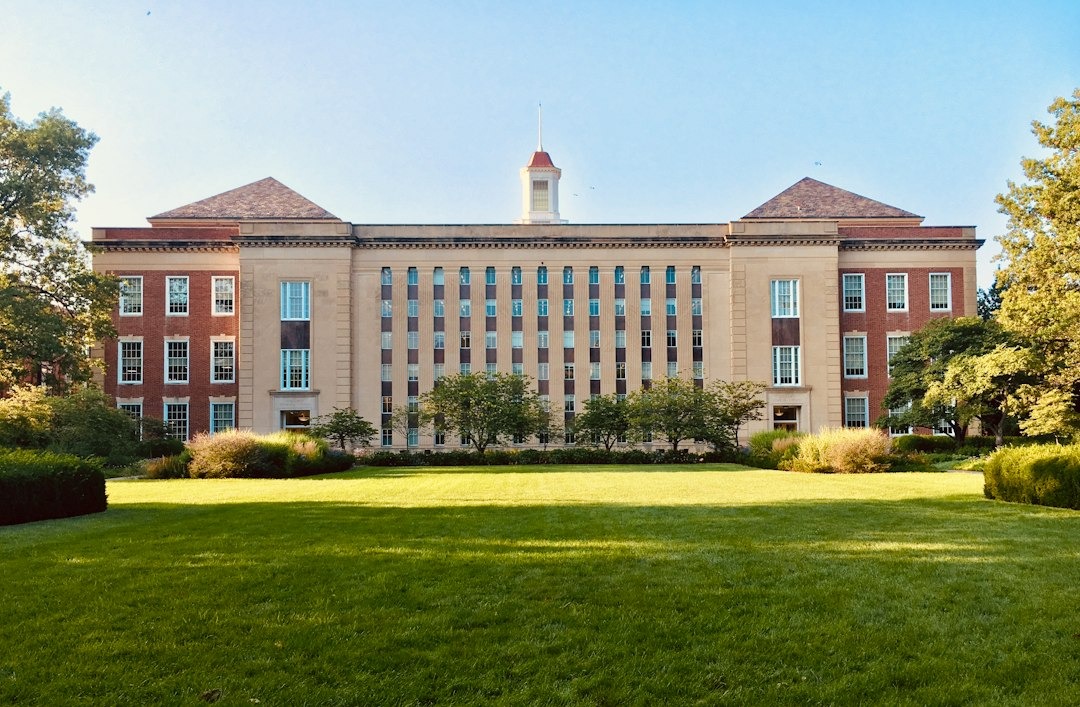
One important distinction for private institutions: private universities are allowed to fix barriers only if they are easily achievable without much burden on expenses. This means they are not held to the same standards as public universities. Public institutions, by contrast, must ensure program accessibility across all services regardless of facility constraints, a higher bar that requires more proactive planning.
Common Compliance Gaps Compliance Officers Should Address
Extracurricular and Non-Academic Programs
All programs of postsecondary institutions, including extracurricular activities, must be accessible to students with disabilities. In my experience, this is one of the most frequently overlooked areas. The ADA covers athletics, student organizations, study abroad programs, and on-campus events, not just classroom instruction.
Coverage Beyond Students
Coverage extends beyond students. The ADA's scope includes faculty, staff, job applicants, and members of the public who access campus programs or services. This means accessibility obligations extend to campus employment practices, public lectures, community events, and vendor services hosted on campus.
Auxiliary Aids and the “Effective Communication” Standard
ADA Title II and III regulations require more than program accessibility and barrier removal. The regulations require nondiscriminatory policies and practices and the provision of auxiliary aids and services, such as sign language interpreters for people who are deaf and Braille materials for people who are blind.
When an auxiliary aid is determined to be necessary, Title II goes further than Section available, unless provision of the aid causes undue burden. The “undue burden” standard is interpreted narrowly, and institutions should document their analysis carefully if they decline to provide a requested aid. Tools like the compliance management resources available through www.bluedag.com can help offices structure and document those determinations consistently.
Frequently Asked Questions
Does ADA Title II apply to private universities?
Both public and private colleges and universities must provide equal access to postsecondary education for students with disabilities. Title II of the ADA covers publicly funded universities, community colleges, and vocational schools. Title III covers privately funded schools. So Title II applies only to public institutions, while Title III covers private ones. Section 504 applies to both, as long as they receive federal financial assistance.
What is the difference between “program accessibility” and “barrier removal”?
Program accessibility is the Title II standard for public institutions: each program or service must be accessible as a whole, even if not every building is. Barrier removal is the Title III/Section 504 standard for private institutions: architectural barriers in existing facilities must be removed when doing so is readily achievable. The concept of “program access” further obligates state and local governments to make every service, program, or activity accessible, even when full structural changes are impracticable.
Who is responsible for filing an ADA/504 complaint at a university?
Students, faculty, staff, and members of the public can all file complaints. A student is not required by law to use the institutional grievance procedure before filing a complaint with the Office for Civil Rights of the U.S. Department of Education; however, both the OCR and the university encourage using internal grievance procedures before filing a complaint with OCR.
Does Section 504 apply to a private university that does not accept government grants?
Only private postsecondary institutions that do not receive government funds are not covered by the broader Section 504 or ADA Title II requirements. In practice, Only private postsecondary to schools that receive federal financial assistance, the reality is that most postsecondary schools do receive federal dollars. Participation in federal student aid programs, including Pell Grants and federal loans, is sufficient to trigger the obligation.
What happens if a university fails to comply?
Complaints under Section 504 and ADA Title II are filed with the U.S. Department of Education's Office for Civil Rights, which investigates and can require corrective action. OCR enforces both for public educational entities. Beyond OCR enforcement, both laws permit private lawsuits, and Section 504 permits compensatory damages where a plaintiff shows intentional discrimination or deliberate indifference.
Disclaimer: This article is provided for general informational and educational purposes only and is not intended to constitute legal advice or a legal opinion. While reasonable efforts have been made to provide accurate and current information, laws, regulations, standards, guidance, and interpretations may change, and no representation or warranty is made regarding the accuracy, completeness, or applicability of the information provided. References to tools, resources, or compliance approaches are for informational purposes only and do not guarantee compliance with the Americans with Disabilities Act (ADA) or any other applicable law or regulation. Readers should consult qualified legal counsel or other appropriate professionals regarding their specific circumstances. BlueDAG assumes no liability for any errors or omissions or for actions taken or not taken in reliance on the information contained in this article.
Sources
- ADA Title II Final Rule (April 2024), U.S. Department of Justice. Federal rule updating Title II regulations for state and local government entities, including public universities. https://www.federalregister.gov/documents/2024/04/24/2024-07758/nondiscrimination-on-the-basis-of-disability-accessibility-of-web-information-and-services-of-state
- Students with Disabilities in Higher Education, BestColleges Research. Statistics on disability prevalence among undergraduates and graduate students. https://www.bestcolleges.com/research/students-with-disabilities-higher-education-statistics/
- Section 504 Compliance Overview, Level Access. Overview of Section 504 obligations for federally funded organizations, including universities. https://www.levelaccess.com/compliance-overview/section-504-compliance/
- Section 504: Access to Higher Education, Informing Families. Explanation of Section 504 rights and obligations at the postsecondary level. https://www.informingfamilies.org/bulletins/section-504
- Postsecondary Institutions and Students with Disabilities, ADA National Network. Architectural and programmatic requirements for public and private universities. https://adata.org/factsheet/postsecondary/
- ADA Compliance Requirements and Road Map for Higher Ed, Accessibility.Works. Analysis of Title II versus Title III for public and private higher education. https://www.accessibility.works/blog/higher-ed-ada-compliance-requirements-road-map/
- Section 504 at Fifty: Disability Policy and Practice in Higher Education, National Association of College and University Attorneys. Legal analysis of Section 504 and ADA obligations in higher education. https://www.nacua.org/resource/section-504-at-fifty-disability-policy-and-practice-in-higher-education-why-504-and-the-ada-remain-relevant-and-important/
- Higher Education’s Obligations Under Section 504 and the ADA, FindLaw. Legal overview of auxiliary aid obligations and enforcement mechanisms. https://www.ed.gov/laws-and-policy/individuals-disabilities/auxiliary-aids-and-services-for-postsecondary-students-with-disabilities
- ADA Compliance in Higher Education: Complete Guide, NovAdesk. Comprehensive breakdown of Title II and Section 504 obligations for compliance teams. https://novadesk.com/feeds/blog/ada-compliance-higher-education
- ADA Self-Evaluation and Transition Plan Action Guide, ADA Action Guide. Step-by-step framework for conducting self-evaluations with community input. https://adaactionguide.org/action-steps
- ADA Grievance Procedures for Public Entities, Know the ADA. Guidance on building effective internal grievance procedures. https://know-the-ada.com/ada-grievance-procedures-that-actually-work-for-public-entities/
- ADA Standards for Accessible Design, U.S. Access Board. Official technical standards for accessible construction and alterations. https://www.access-board.gov/ada/
- Rights of College Students with Disabilities, Disability Rights South Carolina. Plain-language guide to OCR complaint filing and campus grievance procedures. https://www.disabilityrightssc.org/the-rights-of-college-students-with-disabilities-2/
- New Title II Regulations of the ADA and Higher Education, University of Illinois Springfield. Institutional analysis of the April 2024 DOJ final rule and compliance timelines. https://www.uis.edu/news/new-title-ii-regulations-ada-2024-and-higher-education
- Section 504 vs ADA: Key Differences in School, Equilly. Legal analysis of overlapping obligations, remedies, and enforcement mechanisms. https://www.equilly.online/post/section-504-vs-ada-key-differences-in-school