The Cost of ADA Noncompliance for Public Agencies
More than a quarter of all U.S. adults, roughly 70 million people, navigate daily life with challenges in hearing, vision, mobility, cognition, self-care, or independent living, according to CDC Disability and Health Data System reports. That is a substantial share of every community these agencies serve. Yet across the country, KFF Health News reporting on sidewalk accessibility lawsuits found that curb ramps, pedestrian signals, public parks, and government buildings remain out of compliance in city after city. The financial and reputational cost of that gap grows every year.
For public agencies, the question is not whether the Americans with Disabilities Act applies; it does, without exception. Title II of the ADA requires that people with disabilities have equal access to state and local government programs, services, and activities, and therefore the opportunity to engage in civic life. Agencies need to ask whether the cost of compliance today is lower than the cost of enforcement tomorrow. The answer, backed by data from real settlements and DOJ actions, is clear.
Key Takeaways
- Physical barriers trigger legal action. More than 142 local government entities have been named in lawsuits for failing to maintain ADA compliance, and most end in large settlement agreements to fund new construction of ADA sidewalks, ramps, and other improvements. Audit your facilities before a plaintiff does.
- Settlement costs compound fast. Over the past decade, Los Angeles has faced at least $1.7 billion in ADA-related costs from legal settlements, a figure that illustrates how deferred compliance becomes a budget catastrophe. Build a remediation schedule before litigation forces one.
- No building is grandfathered. A common misconception is that older buildings are grandfathered under the ADA, but this is completely false. Title II still requires equal access to programs, services, and activities even when they occur in a physically inaccessible location.
- Proactive investment saves many times its cost. Proactive compliance costs 10-20% of what reactive enforcement costs, according to the Accessible Compliance Group’s government budget analysis. Agencies that budget for accessibility now avoid emergency remediation rates and legal fees later.
- DOJ enforcement is ongoing and nationwide. The Department of Justice’s Project Civic Access is a wide-ranging effort to ensure that counties, cities, towns, and villages comply with the ADA, and the Department has conducted comprehensive Title II reviews in all 50 states, as well as Puerto Rico and the District of Columbia.
Quick-Start Prioritization Framework
Compliance Area | Best First Action | Effort Level | Time to Results |
|---|---|---|---|
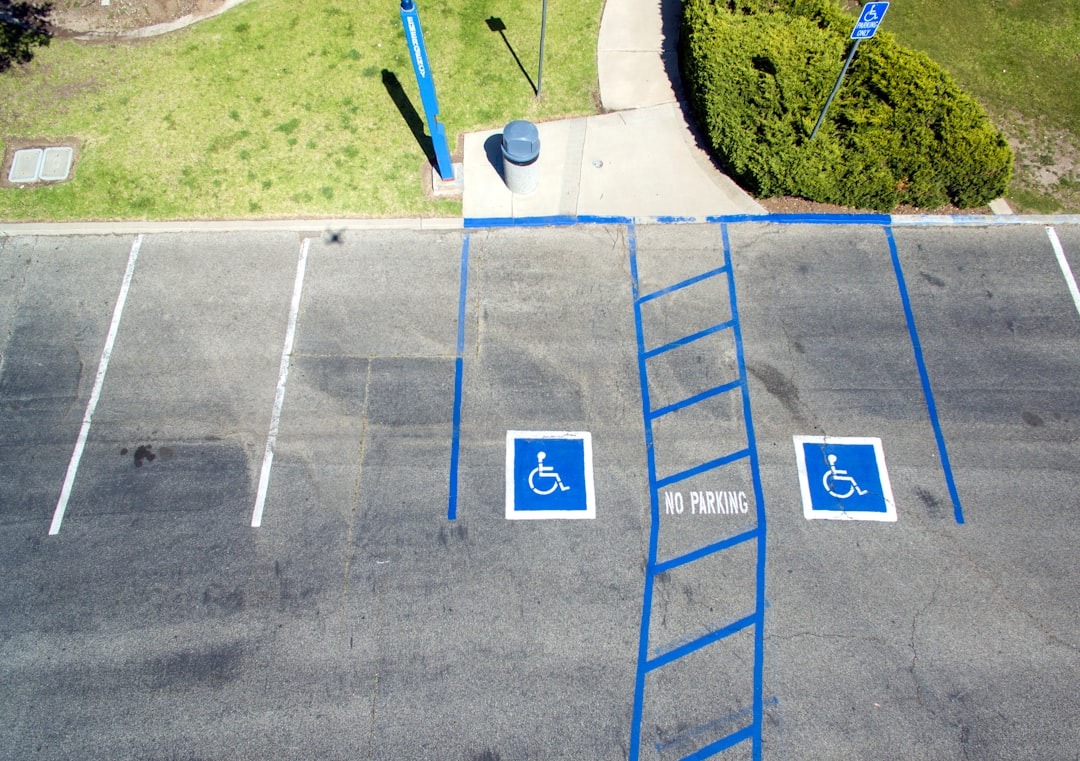
Parking lots and access aisles | Physical survey and re-striping | Low | Days to Weeks |
Curb ramps and sidewalks | Self-evaluation and transition plan update | Medium | Weeks to Months |
Building entrances and doorways | Barrier audit using 2010 ADA Standards | Medium | Weeks to Months |
Restrooms and service counters | Facility inspection and structural remediation | High | Months |
Grievance procedure and ADA Coordinator | Policy review and staff designation | Low | Days |
Transition plan documentation | Update or create formal written plan | Medium | Weeks |
Start here if you are:
- A small agency with limited staff: Begin with an accessible parking audit and a posted grievance procedure; both are low-cost, high-visibility wins that demonstrate good faith.
- A mid-size agency with 50 or more employees: Prioritize a formal ADA self-evaluation and transition plan. Title II of the ADA requires all public agencies, regardless of size, to ensure their services, programs, and activities are accessible to persons with disabilities. Compliance includes self-evaluation of building facilities, rights-of-way facilities, and communications. Public entities with 50 or more employees are also required to designate an ADA Coordinator.
- A large city or county facing complaint history: Engage legal counsel and begin a DOJ-standard facility survey immediately, prioritizing high-traffic civic spaces such as courthouses, libraries, and community centers.
What Title II Actually Requires of Public Agencies
The Scope Is Broader Than Most Agencies Realize
Title II of the Americans with Disabilities Act prohibits disability-based discrimination by all public entities at the local and state levels. This includes public schools, transportation agencies, courts, and police departments. Title II also applies to all services and programs offered by public entities, whether delivered in person or through digital platforms.
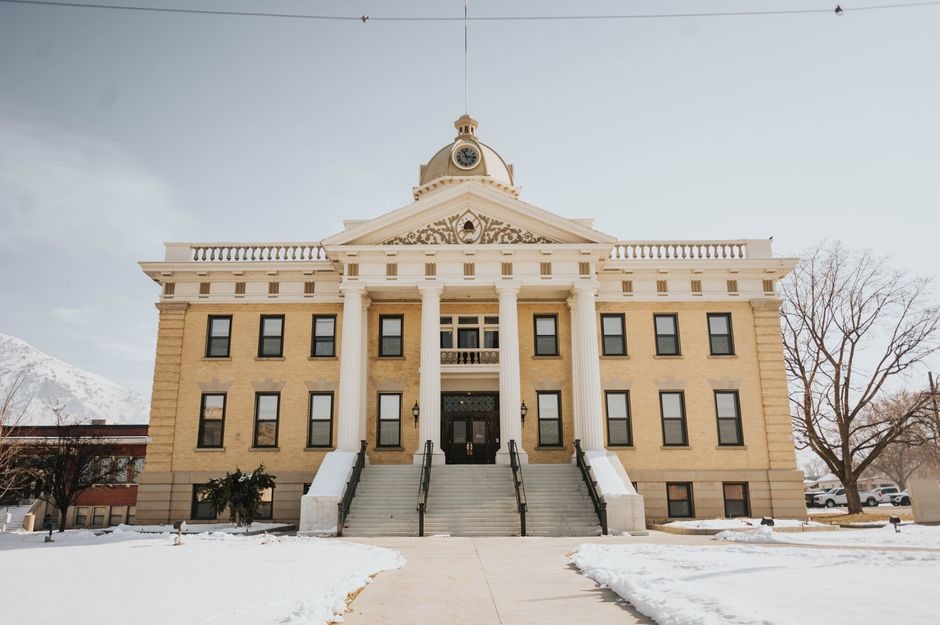
In practice, that scope covers a wide range of physical infrastructure. Physical spaces such as government offices, courthouses, and libraries must be accessible to people with disabilities. This includes accessible entrances, parking, signage, and restrooms. An agency that runs a civic event in an inaccessible facility, operates a polling place without a compliant accessible route, or maintains a park with no reachable amenities is already in violation, even if no formal complaint has been filed yet.
The Self-Evaluation and Transition Plan Obligation
An ADA self-evaluation is required of all public entities to identify barriers in programs and activities that prevent persons with disabilities from access. Every agency must evaluate all programs and facilities that require public access, including the public right-of-way (curb ramps, sidewalks, accessible pedestrian signals, and transit stations), as well as rest areas, parks, trails, and public buildings.
Performing a self-evaluation enables state and local governments to identify and modify programs, activities, and services, as well as the policies and practices inconsistent with Title II requirements. Developing a transition plan for needed structural changes enables agencies to identify physical obstacles in facilities and specify steps and a schedule to achieve compliance. If your agency has not updated its transition plan in the past five years, the barriers identified in that older document are still legally relevant, and probably more numerous now.
Pro Tip: The Northeast ADA Center recommends that agencies periodically re-assess themselves even after completing an initial self-evaluation, because programs, services, and activities evolve over time and new barriers may emerge through routine construction, repair, or renovation.
The Real Financial Cost of Physical Noncompliance
Fines, Settlements, and Legal Fees
The financial exposure for public agencies that ignore physical accessibility requirements is substantial. ADA civil penalties were adjusted for inflation in 2024, and a first violation can now result in a fine of $115,231, increasing to $230,464 with a second offense, according to Delaware’s Government Information Center analysis of noncompliance consequences. These figures apply before legal fees, remediation costs, or court-ordered monitoring agreements are factored in.
Beyond fines, agencies routinely face settlement agreements that require years of supervised compliance. Failure to comply can result in mandatory injunctive relief, compensatory damages, attorneys’ fees, and ongoing federal oversight through settlement agreements, as Jeffer Mangels’ 2026 ADA enforcement guide outlines. Federal oversight does not end when a check is written; it continues until the agency demonstrates sustained compliance.
What Settlements Look Like
The Los Angeles case adds to a growing pattern of ADA noncompliance. In 2016, the City was sued over deteriorating sidewalks that hindered safe passage for people with disabilities, an agreement the City has yet to fully honor. Despite billions spent on past settlements, the City faces continued scrutiny for failing to ensure accessibility while its Department of Disability struggles to keep up.
That pattern repeats in cities of all sizes. One city’s sidewalk and curb-ramp problems were so widespread that it estimated compliance would cost $1.4 billion and take 30 years. In the years leading up to the suit, the city was not allocating money for sidewalk repairs, for the ADA or otherwise, even while paying out millions in injury claims, as detailed by Time magazine’s reporting on sidewalk accessibility litigation.
The average curb ramp costs between $9,000 and $19,000 to install, according to KFF Health News. Installing one ramp proactively costs a fraction of what a class-action settlement, which may require dozens or hundreds of ramps at emergency rates, will cost. Agencies that defer this work do not avoid the expense; they multiply it.
DOJ Project Civic Access: A Nationwide Enforcement Reality
Project Civic Access settlement agreements resolve cases in the Department’s wide-ranging effort to ensure that counties, cities, towns, and villages comply with the ADA by eliminating physical and communication barriers that prevent people with disabilities from participating fully in community life. The Department has conducted reviews in all 50 states, as well as Puerto Rico and the District of Columbia.
These agreements are not just financial penalties. Under agreements reached through Project Civic Access, counties must make physical modifications to facilities surveyed by the Department so that parking, routes to buildings, entrances, service areas and counters, restrooms, public telephones, and drinking fountains are accessible to persons with disabilities, as the Department of Justice’s Montgomery County agreement illustrates. The compliance timeline in those agreements can stretch six to eight years, with active DOJ monitoring throughout.
Pro Tip: If your agency has not yet completed or updated its ADA self-evaluation and transition plan, that alone can become the basis for a Project Civic Access investigation. ADA.gov's guidance for city governments notes that people with disabilities are often unable to participate in public meetings, attend city functions, or access civic programs when agencies neglect their physical compliance obligations.
The Most Common Physical Violations That Trigger Complaints
Parking, Entrances, and Accessible Routes
The most common ADA violations include inaccessible entrances such as missing ramps and narrow doorways, non-compliant restrooms including inadequate space and missing grab bars, and insufficient accessible parking. In a public agency context, each category represents both a legal liability and a direct barrier to civic participation.
Curb ramps often exceed the maximum allowable 1:12 (8.33%) slope, a common finding in facility surveys described in BVNA Magazine’s ADA violation analysis. Even a ramp that looks functional can be noncompliant if slope, landing dimensions, or edge protection fall outside the required ranges.
ADA compliance is a continuous maintenance obligation. Public buildings, courthouses, libraries, and city halls accumulate accessibility drift between formal audits: a door closer is replaced with a non-compliant model, a grab bar is removed for repair and reinstalled at the wrong height, a curb ramp’s detectable warnings wear away, as OxMaint’s public building compliance guide explains. These are not intentional violations, but they are violations nonetheless, and they carry the same legal consequences.
Restrooms and Interior Spaces
Restrooms often have major accessibility issues because they contain many regulated elements. Wheelchair stalls, lavatories, doors, dispensers, mirrors, and flooring surfaces must each meet specific dimensional and operational standards under the U.S. Access Board’s 2010 ADA Standards for Accessible Design. A single restroom can contain dozens of individual violations, none of which are visible to the untrained eye during routine building operations.
People with disabilities cannot participate in city government activities, such as public meetings, when they cannot access the city’s programs and services. If a municipal building such as a courthouse is inaccessible, people with disabilities who use wheelchairs are unable to participate in jury duty, attend hearings, and access other services because doorways are too narrow, restroom facilities are inaccessible, and steps are the only way to reach all or portions of a facility, according to ADA.gov’s guidance on city government common problems.
Pro Tip: In reviewing public facility audits, the most frequently overlooked violations are in restrooms and on accessible routes between parking and building entrances. These are also the areas that generate the highest volume of complaints. Prioritizing those two zones in your self-evaluation will address the majority of your legal exposure.
The Hidden Costs Beyond the Settlement
Legal Fees, Staff Time, and Emergency Remediation
When a complaint is filed, or a DOJ investigation begins, the costs that accumulate rarely stop at the settlement figure. Any legal action would require timely facility remediation, additional training and/or personnel, and the legal fees an entity would have spent defending itself, as the Delaware Government Information Center notes. Emergency remediation, work completed under a legal deadline rather than a planned schedule, typically costs significantly more than the same work done proactively.
Agencies frequently underestimate staff time as a cost category. Responding to DOJ document requests, coordinating facility surveys, preparing reports for legal counsel, and managing a multi-year compliance monitoring agreement all consume staff hours that were not budgeted for routine operations.
Reputational and Community Trust Costs
When a government agency or public institution fails to meet accessibility standards, it can lose credibility and public trust. Rebuilding that trust can take years, as Recite Me’s ADA Title II compliance guide observes. For elected officials and department heads, that reputational exposure is difficult to quantify but impossible to ignore.
ADA noncompliant sidewalks, crosswalks, and public transportation stops permeate U.S. cities from coast to coast. From Philadelphia to Los Angeles, disability rights groups have sued city governments and public transportation agencies for consistently failing to meet ADA requirements, according to Next City’s reporting on accessibility lawsuits. These are not anonymous legal actions. They generate local media coverage, community advocacy, and lasting associations between an agency’s name and the barriers it failed to remove.

Building a Defensible Compliance Program
What “Good Faith” Looks Like in Practice
Agencies that can demonstrate ongoing, documented compliance efforts are in a much stronger position when a complaint is filed. An actively updated formal ADA transition plan, a designated ADA Coordinator empowered to act, and a published grievance procedure all signal to the DOJ and plaintiffs’ attorneys that the agency takes its obligations seriously.
A transition plan addresses architectural barriers that impact access to programs, services, and activities. The plan should prioritize needed structural improvements and is required for public entities with 50 or more employees. The plan should be developed with input from the disability community, per the Northeast ADA Center’s administrative requirements guidance. Community input is both a legal requirement and a practical way to identify the barriers that matter most to the people your agency serves.
The Proactive Cost Advantage
Proactive compliance costs 10-20% of what reactive enforcement costs. The question is not whether the entity can afford to get compliant. It is whether the entity can afford not to, as the Accessible Compliance Group’s government website accessibility budget guide states directly. The same principle applies to physical infrastructure. Installing a compliant curb ramp on a routine capital improvement schedule costs a fraction of what the same ramp costs under a DOJ consent decree, with compressed timelines and ongoing monitoring requirements.
Tools like BlueDAG help public agencies manage this kind of work by organizing self-evaluation data, tracking transition plan progress, and maintaining documentation that demonstrates good-faith compliance over time. For agencies managing dozens or hundreds of facilities, structured records can be the difference between a defensible compliance program and an exposed one.
Frequently Asked Questions
What is an ADA Title II self-evaluation, and is it actually required?
An ADA self-evaluation is required of all public entities to identify barriers in programs and activities that prevent persons with disabilities from accessing. There is no size exemption. Every agency, from a small rural township to a large metropolitan government, must complete one. If your agency’s evaluation was completed in the early 1990s and never updated, it is almost certainly out of date relative to the U.S. Access Board’s current 2010 ADA Standards.
What happens if the DOJ receives a complaint about our agency?
The DOJ says that, in most cases, it will reach out to a municipality if it receives a complaint to discuss and try to address remediation before any legal action. The penalties are discretionary and would only come as part of a DOJ lawsuit. That said, cooperation during the initial outreach phase does not eliminate the remediation obligation, and agencies that cannot demonstrate good faith efforts often face more formal enforcement action.
Are older public buildings exempt from ADA physical accessibility requirements?
A common misconception is that older buildings are grandfathered under the ADA if they date from before 1992. This is completely false. Title II requires equal access to programs, services, and activities even when they occur in a physically inaccessible location. This ensures equal access for people with disabilities while balancing the feasibility of making every pre-1992 building fully accessible. The standard is program access, not full structural renovation of every facility, but that still requires the agency to ensure people with disabilities can actually participate.
How much can ADA physical noncompliance cost a public agency?
The range is wide. A first violation can now result in a $115,231 fine, increasing to $230,464 with a second offense under inflation-adjusted 2024 figures. At the high end, cities like Los Angeles have faced hundreds of millions to billions of dollars in settlement-driven remediation costs, while smaller municipalities frequently settle physical accessibility complaints for tens to hundreds of thousands of dollars when attorney fees, required construction, and monitoring agreements are included.
What should we do first if we suspect our facilities are noncompliant?
Start with a formal self-evaluation. Title II of the ADA requires that agencies meet all requirements through the self-evaluation process. Self-evaluation helps public agencies identify the facilities, programs, and services that must be modified or relocated to ensure compliance. Prioritize high-traffic civic spaces first, parking lots, building entrances, restrooms, and public meeting rooms, then build a transition plan with a realistic schedule and cost estimates for each required modification.
Disclaimer: This article is provided for general informational and educational purposes only and is not intended to constitute legal advice or a legal opinion. While reasonable efforts have been made to provide accurate and current information, laws, regulations, standards, guidance, and interpretations may change, and no representation or warranty is made regarding the accuracy, completeness, or applicability of the information provided. References to tools, resources, or compliance approaches are for informational purposes only and do not guarantee compliance with the Americans with Disabilities Act (ADA) or any other applicable law or regulation. Readers should consult qualified legal counsel or other appropriate professionals regarding their specific circumstances. BlueDAG assumes no liability for any errors or omissions or for actions taken or not taken in reliance on the information contained in this article.
Sources
- Disability and Health Data Now, Centers for Disease Control and Prevention. 2022 BRFSS data on U.S. adult disability prevalence. https://www.cdc.gov/dhds/about/index.html
- Reluctant Localities Are Being Dragged Into Court to Fix Sidewalks, KFF Health News. Reporting on ADA sidewalk and curb ramp litigation across U.S. cities. https://kffhealthnews.org/courts/reluctant-localities-are-being-dragged-into-court-to-fix-sidewalks-for-people-with-disabilities/
- The ADA and Title II Public Entities, Northeast ADA Center. Administrative requirements for Title II compliance, including self-evaluation and transition plans. https://northeastada.org/resource/the-ada-and-title-ii-public-entities
- Administrative Requirements for Title II Public Entities, Northeast ADA Center. Guidance on ADA Coordinator, grievance procedures, and transition plans. https://northeastada.org/resource/administrative-requirements-for-title-ii-public-entities
- Consequences of Accessibility Non-Compliance, Delaware Government Information Center. Analysis of ADA civil penalties and government enforcement consequences. https://gic.delaware.gov/consequences-of-accessibility-non-compliance/
- LA Sued Again for Alleged ADA Failures, This Time Over Public Parks, Westside Current. Coverage of Los Angeles ADA settlement history and ongoing compliance failures. https://www.westsidecurrent.com/news/la-sued-again-for-alleged-ada-failures-this-time-over-public-parks/article_c92417ae-6fe0-46e9-88ec-61a0e2032dd4.html
- ADA Noncompliance: Costly Lawsuits Cities and Businesses Face, ADA Solutions. Overview of landmark physical accessibility cases against local governments. https://www.ada.gov/resources/ada-city-governments/
- The ADA and City Governments: Common Problems, ADA.gov. Official DOJ guidance on Title II physical accessibility obligations for municipalities. https://www.ada.gov/resources/ada-city-governments/
- Project Civic Access, Archive.ADA.gov. DOJ settlement agreements for physical and communication barrier removal in local governments. https://archive.ada.gov/civicac.htm
- Justice Department Signs Agreement with Montgomery County, U.S. Department of Justice. Project Civic Access settlement requiring physical modifications to county facilities. https://www.justice.gov/opa/pr/justice-department-signs-agreement-ensure-civic-access-people-disabilities-maryland
- DOJ and Government Enforcement of the ADA: What Public Entities Should Expect in 2026, Jeffer Mangels Butler & Mitchell LLP. Analysis of Title II enforcement actions and legal consequences. https://ada.jeffer.com/doj-and-government-enforcement-of-the-ada-what-public-entities-and-businesses-should-expect-in-2026/
- ADA Self-Evaluations and Transition Plans, Kimley-Horn. Professional guidance on developing Title II self-evaluations and transition plans. https://www.kimley-horn.com/services/advisory/ada-transition-plan-accessibility-consulting-services/
- ADA Transition Plan Template and Resources, Ohio Department of Transportation. State-level guidance for public agency self-evaluation and transition planning. https://www.ada.gov/resources/title-ii-primer/
- Prioritizing Accessibility for All, SRF Consulting. Overview of ADA self-evaluation scope for public right-of-way and facilities. https://www.srfconsulting.com/prioritizing-accessibility-for-all/
- ADA Title II: A Complete Guide to Web Compliance, Recite Me. Overview of Title II requirements, including physical and program access obligations. https://reciteme.com/us/news/ada-title-ii-compliance/
- The 8 Top ADA Violations and How to Avoid Them, BVNA Magazine. Technical breakdown of common physical accessibility violations. https://www.bvna.com/magazine/8-top-ada-violations-and-how-avoid-them
- ADA Facility Compliance Maintenance for Public Buildings, OxMaint. Analysis of how accessibility drift occurs through routine maintenance in public buildings. https://oxmaint.com/industries/government/ada-facility-compliance-maintenance-for-public-buildings
- Government Website Accessibility Budget Guide, Accessible Compliance Group. Cost comparison of proactive versus reactive ADA compliance for government entities. https://www.accessiblecompliancegroup.com/blog/government-website-accessibility-budget-guide
- ADA Standards for Accessible Design, U.S. Access Board. Official 2010 ADA Standards for newly constructed and altered facilities. https://www.access-board.gov/ada/
- Reluctant Towns, Cities and States Are Being Dragged Into Court, Time. In-depth reporting on the financial scale of sidewalk and curb ramp compliance failures. https://time.com/6105909/sidewalk-accessibility-lawsuits/